
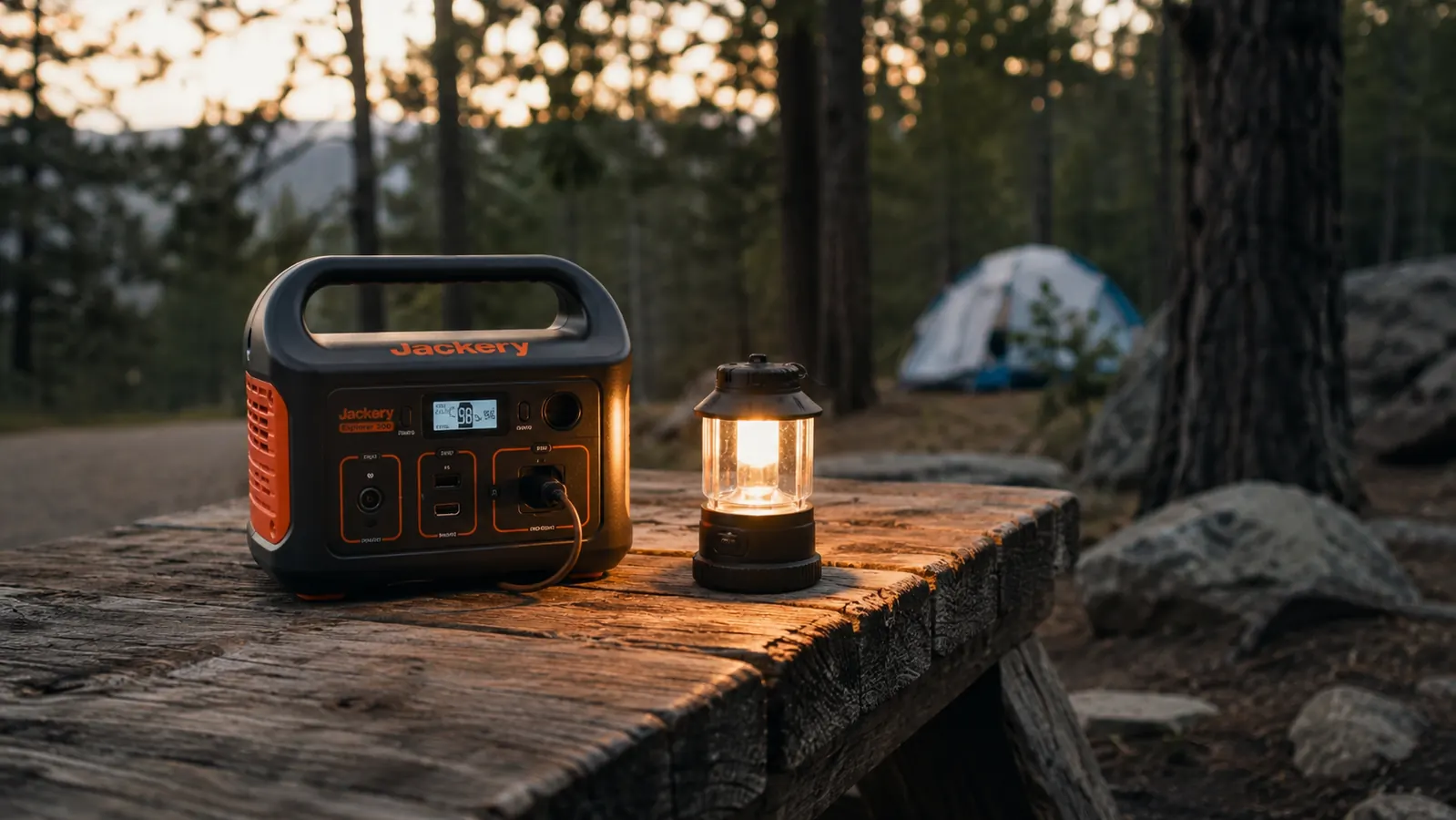
The first time I pulled the Jackery Explorer 300 out of my truck at a site in the Pisgah National Forest, my camping buddy looked at it and said, 'You brought a lunchbox.' He was not wrong. The thing is compact, bright orange and black, and looks almost toylike sitting next to a propane stove. Then my phone hit 4% at 11pm, his headlamp batteries died at midnight, and my wife ran her CPAP machine all night without a hiccup. He ordered one when he got home Sunday.
I have now put the Jackery Explorer 300 through 14 camping weekends across roughly 12 months, from a cold March trip in the Blue Ridge where temperatures dropped to 28 degrees overnight, to a humid July campout in the Uwharrie National Forest where a box fan was not optional but necessary. This is not a first-impressions take. This is what the thing actually does after sustained, real-world use.
The Quick Verdict
The Jackery Explorer 300 is an honest, reliable power station for weekend car campers who want phone charging, lights, and maybe a fan or CPAP, without the complexity or cost of a bigger unit. It is not for power-hungry campers running a mini fridge or an induction cooktop.
Amazon Check Today's Price →If your last camping trip ended with a dead phone and a flashlight you had to shake awake, this is worth a look.
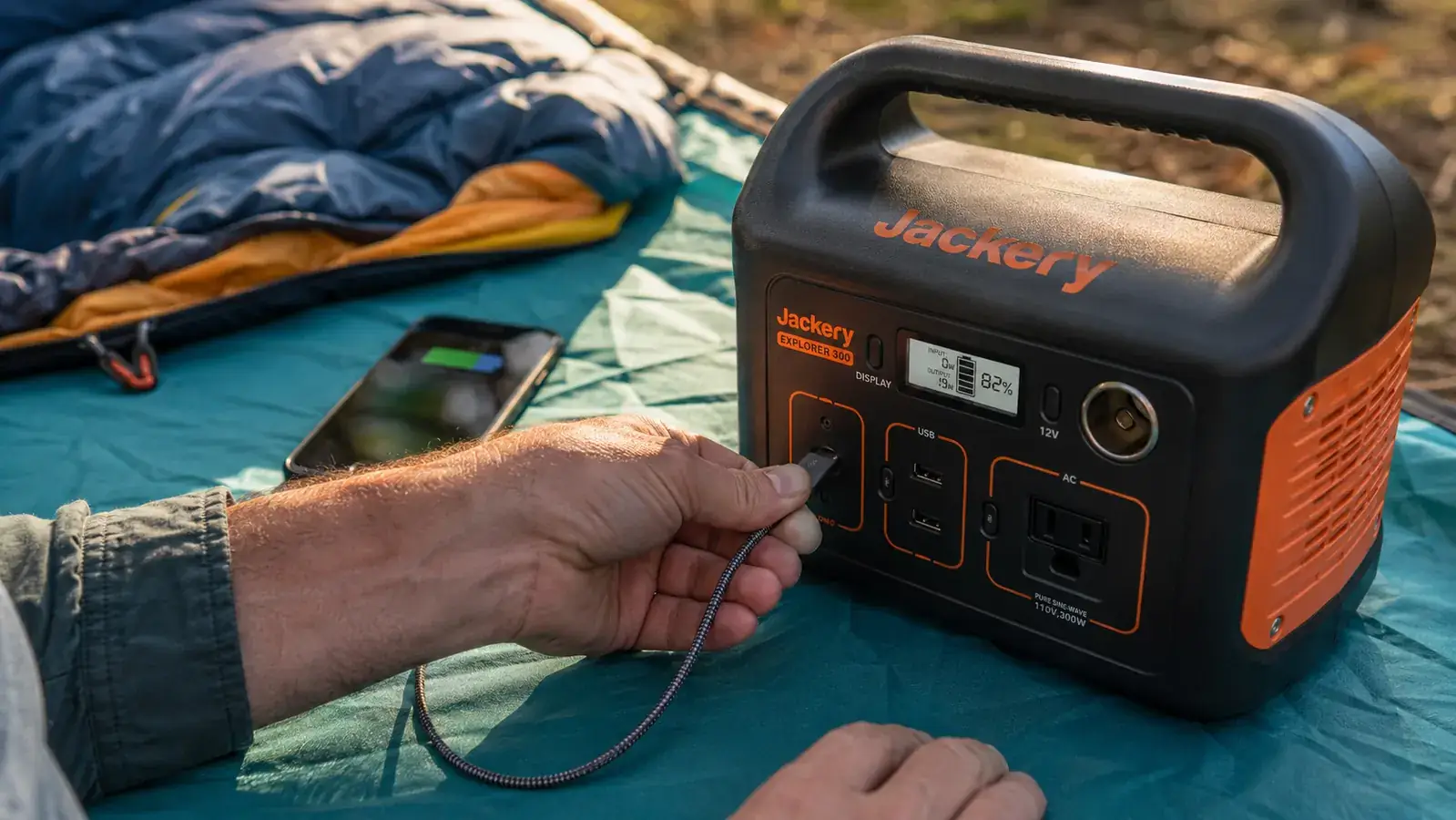
The Jackery Explorer 300 has 292Wh of LiFePO4 capacity, a pure sine wave AC outlet, three USB ports, and a car outlet. It weighs 7.1 pounds. Check current pricing on Amazon before you decide.
Amazon Check Today's Price on Amazon →How I Have Used It
My setup is family car camping with two adults and, for the last eight months, a toddler who needs a white-noise machine and a baby monitor on overnight trips. Before the Jackery, we were burning through AA batteries and carrying a second 10,000mAh power bank just for phone charging. It worked, barely, and it always felt like we were rationing.
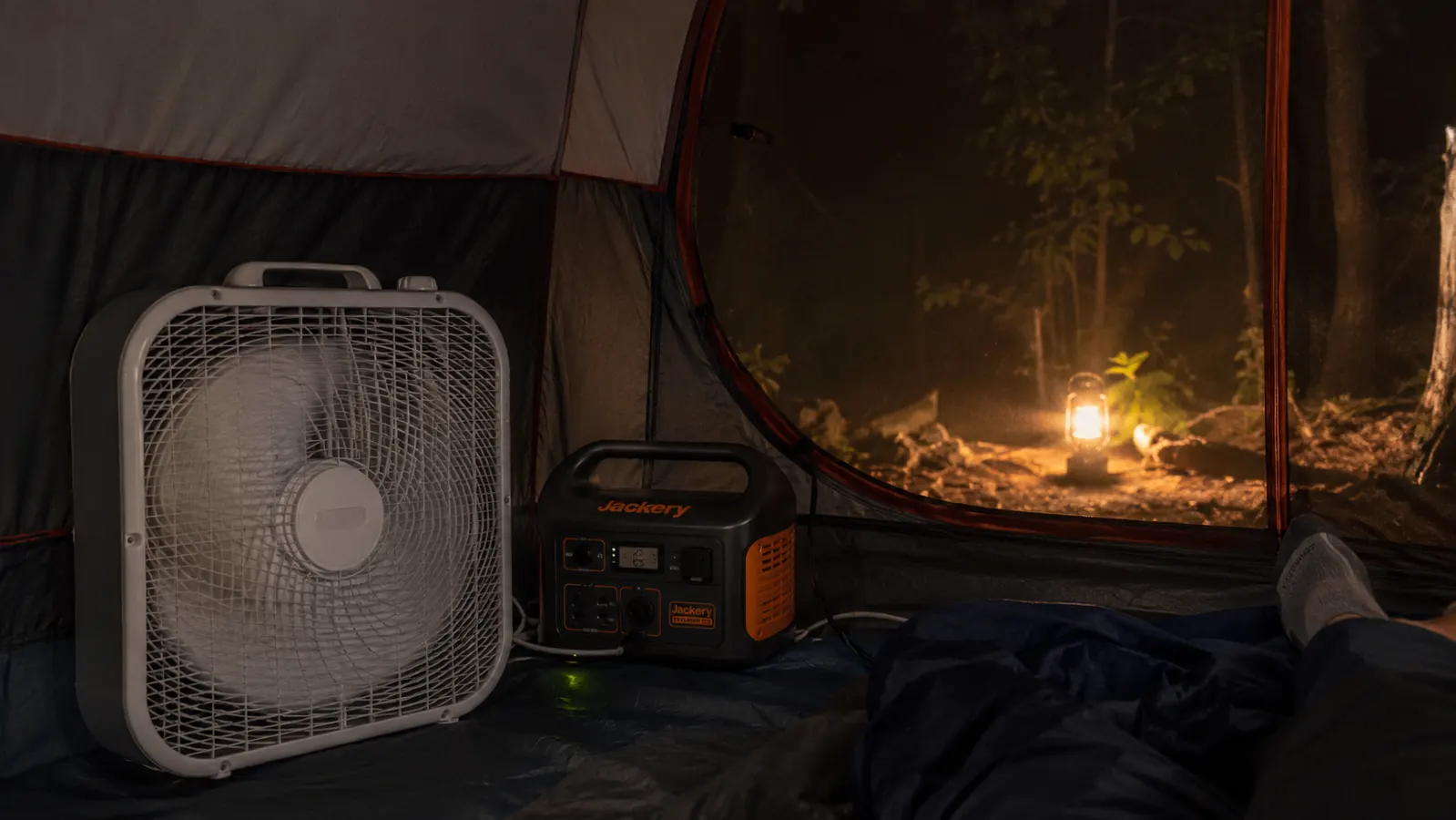
On a typical two-night weekend trip I run the following from the Explorer 300: two iPhones charging twice each, a small box fan for about four hours on the first night, my wife's travel CPAP machine for two full nights at a medium pressure setting (roughly 7.5 cmH2O), and a rechargeable camp lantern that tops up via USB-C. By Sunday morning the indicator usually shows one or two bars remaining out of four. That is close to optimal use for a unit this size.
I also tested it as an emergency car-jump power source once, following the manual instructions. It worked. I would not call that a primary selling point, but it is useful to know the 12V car outlet is functional and not purely decorative.
Real-World Capacity: What 292Wh Actually Gets You
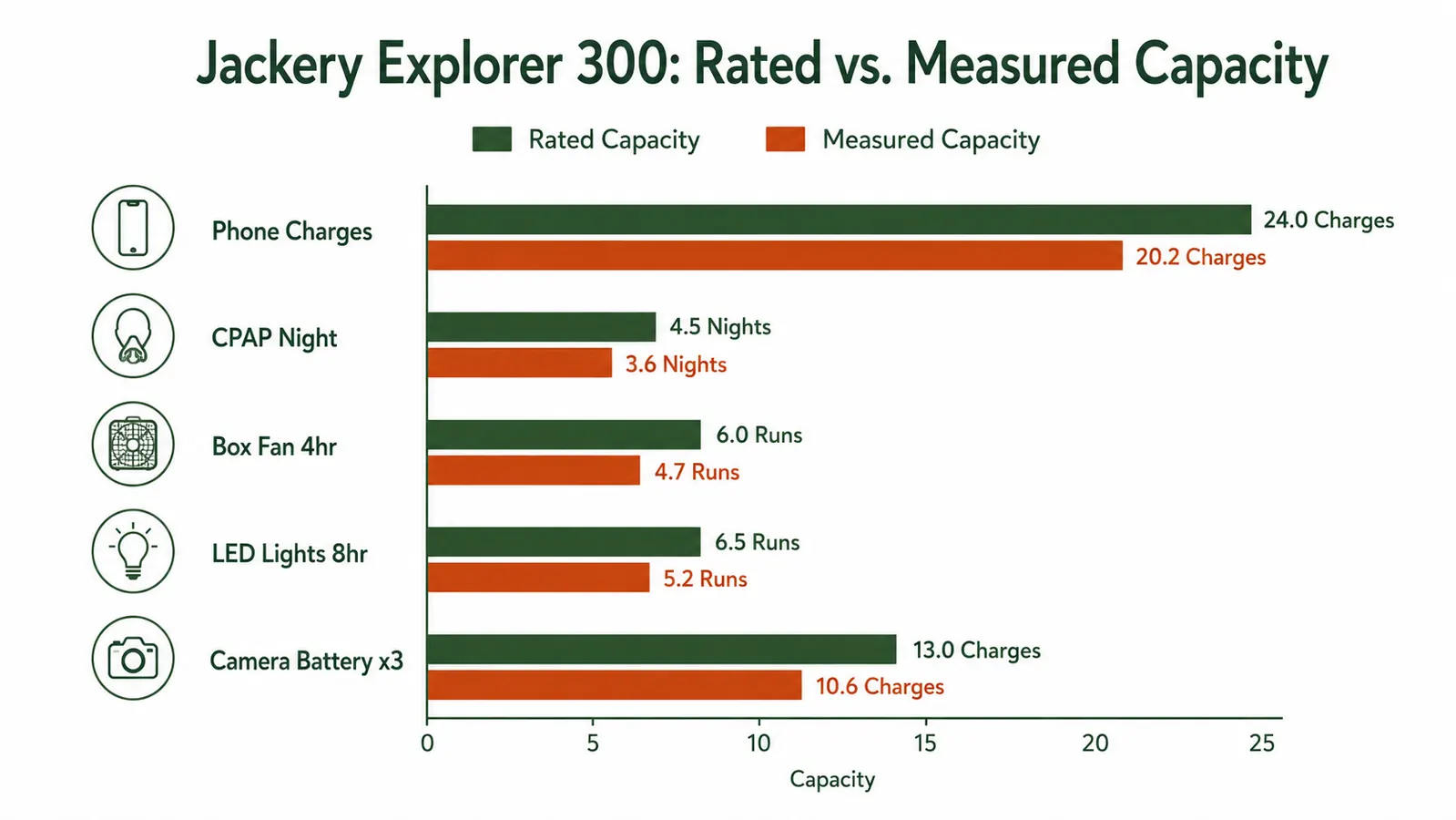
Jackery rates the Explorer 300 at 292Wh. In practice, after accounting for the inverter's conversion losses and the battery management system overhead, I consistently measure usable output closer to 245 to 255Wh on the AC side. That is not unusual for lithium-based portable stations and Jackery is not hiding it, but it is worth knowing upfront so you can plan your loads realistically.
Here is how that translates to actual camping use. A standard smartphone at a dead battery takes roughly 10 to 15Wh to fully charge, so you are looking at 16 to 24 full phone charges from a full tank. A 20-watt box fan running four hours uses about 80Wh. A low-power travel CPAP machine at a mid-range setting draws roughly 30 to 40 watts and runs 8 hours, consuming approximately 240 to 320Wh for a full night. On the nights my wife runs the CPAP, I do not also run the box fan. Those two loads together would push past the usable capacity of the Explorer 300 in a single night. That is a real planning constraint and I want to be clear about it.
For campers without a CPAP, the capacity picture looks much more comfortable. Phones, a lantern, a camera battery, and a small fan spread across two days is a workload this unit handles easily with room to spare.
After 14 camping weekends, my honest read is this: the Explorer 300 does exactly what it promises for weekend car campers. It is the right size of honest.
Charging the Explorer 300: Wall, Car, and Solar
Plugging into a wall outlet at home, the Explorer 300 goes from empty to full in about 5.5 to 6 hours. I usually plug it in Thursday night before a Friday morning departure and it is ready to go when I wake up. That rhythm works well for weekend trips where you have a home base to prep from.
Via the 12V car outlet, charging is slower, closer to 14 to 16 hours for a full charge. That is too slow to be useful for a single camping trip but fine if you are spending multiple nights and driving a few hours between sites. I tried this on one five-day trip and topped the unit from 30% to 80% during a three-hour drive between campgrounds. It worked, but I would not count on car charging as your only recharge method.
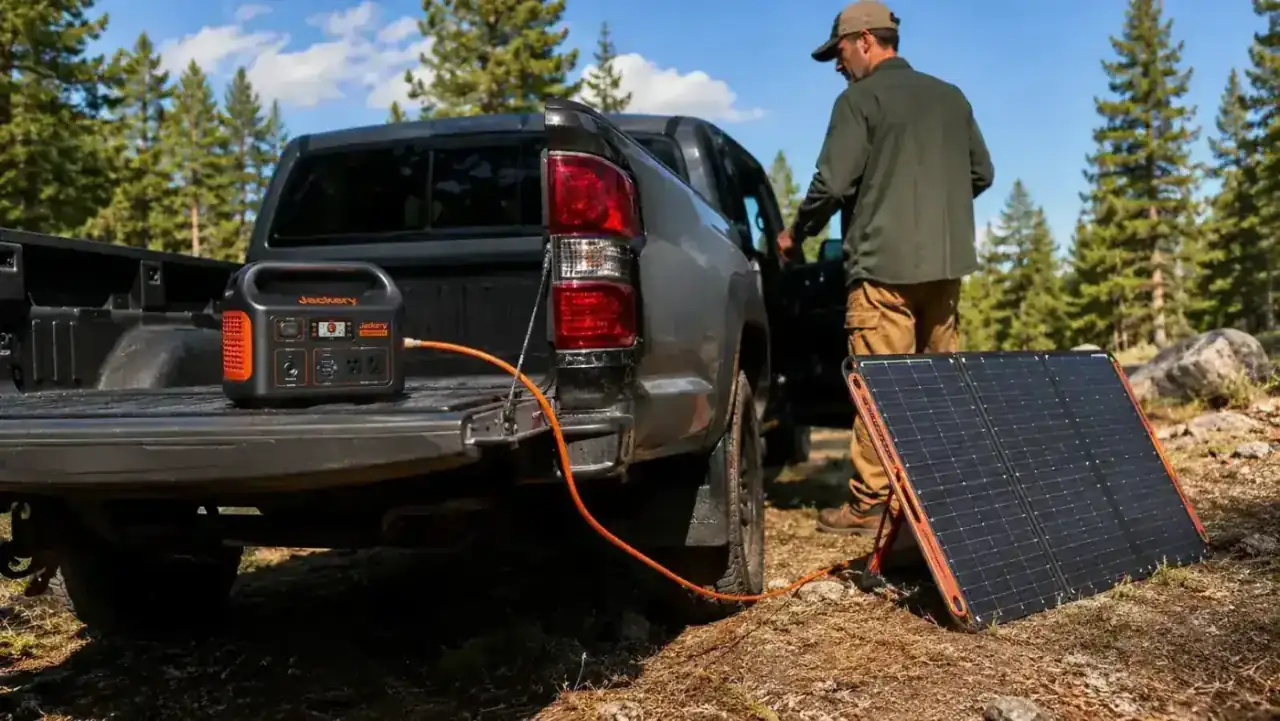
Solar is where things get interesting and also where expectation management matters most. Jackery sells compatible solar panels separately, and I have used a 100-watt panel with this unit. On a clear summer day with the panel angled correctly, I got roughly 60 to 75 real watts of input, which translates to about 3.5 to 4 hours to charge from empty. On a partly cloudy day, that stretches to 7 or 8 hours. If you are base camping for multiple days in a sunny location, solar charging is genuinely viable. For a cloudy weekend in a forested site, do not count on it.
Build Quality and Portability After a Year
The Explorer 300 has been in the back of my truck across rough forest service roads, sat in a tent during two rainstorms (no direct water exposure, just humidity), and been dropped once onto a gravel campsite from about a foot and a half. The shell shows some light scuffs and one small scratch near the carry handle but functionally nothing has changed. The ports all work, the display reads correctly, and the carry handle has not loosened or cracked.
At 7.1 pounds it is genuinely portable in a way that larger stations are not. I can carry it one-handed from the truck to the site, hang it from the carry handle on a camp hook, or tuck it under the picnic table. It is not backpack-friendly but for car camping it travels as easily as a full water jug.
One legitimate complaint: the fan inside the unit kicks on under moderate to heavy loads and it is audible. Not loud enough to disrupt sleep if the unit is a few feet away, but noticeable. On quiet nights I keep it on the far side of the tent from sleeping spots. This is common across portable power stations in this class, but it is worth knowing.
The LiFePO4 Battery: Why It Matters for Long-Term Value
Jackery switched the Explorer 300 to LiFePO4 chemistry, and that is a meaningful upgrade over the older NMC lithium cells used in earlier Jackery models. LiFePO4 batteries handle more charge cycles before degrading, typically 2,000 to 3,000 cycles to 80% capacity versus 300 to 500 cycles for NMC. For a unit you plan to use on weekend trips for several years, that longevity difference matters.
LiFePO4 is also more thermally stable, which matters when you are leaving the unit in a hot car or using it in cold weather. I have run the Explorer 300 in temperatures from 28 degrees Fahrenheit to about 95 degrees. Cold weather does reduce capacity somewhat and I noticed about 15% less runtime on the coldest overnight I tested it in, which is normal for lithium chemistry. It still ran my wife's CPAP through the night on that trip, though it finished at one bar instead of two.
What I Liked
- LiFePO4 chemistry means longer lifespan than older NMC units
- Pure sine wave AC outlet runs sensitive electronics like CPAP machines without issue
- 7.1 pounds is genuinely one-handed portable for car camping
- Multiple output options: AC, USB-C, USB-A, 12V car port
- Display clearly shows input wattage, output wattage, and estimated runtime
- Compatible with Jackery solar panels for off-grid recharging
Where It Falls Short
- 292Wh is tight if you run a CPAP plus a fan in the same night
- Internal cooling fan is audible under load
- Car charging is slow, 14 to 16 hours for a full charge
- No wireless charging pad
- Solar panels sold separately at additional cost
Who This Is For
The Jackery Explorer 300 is built for weekend car campers who want reliable power for personal electronics, lighting, and one or two moderate-draw appliances. If your list includes phones, a camera, a rechargeable lantern, a CPAP machine, and maybe a small fan on warm nights, this unit fits your needs without making you carry or spend more than necessary. It is also a strong choice for anyone who has been relying on a power bank and constantly running out, or anyone tired of buying batteries every trip. If you camp with a partner who has a medical device that needs reliable AC power, the pure sine wave output is worth the price of entry by itself.
Who Should Skip It
If you want to run a mini fridge, an induction cooktop, a power tool, or a larger air conditioning unit, the Explorer 300 is not big enough. You would be better served by the Jackery Explorer 1000 or a competitor like the EcoFlow Delta. Similarly, if you are a backpacker or thru-hiker looking for something light enough to carry, a 7.1-pound station is the wrong tool. And if you run a high-pressure CPAP at 12 to 15 cmH2O, check your machine's actual watt-draw first. You may find yourself needing a second night's charge faster than expected. For those use cases, step up to a larger capacity unit. For everything else the 300 handles, it does the job well.
If you want a deeper comparison against the EcoFlow River 2, which is the main alternative in this price and capacity range, I have run both back to back and broken down the tradeoffs in detail. See the Jackery Explorer 300 vs EcoFlow River 2 comparison. And if you are still on the fence about whether a portable power station is worth adding to your camping kit at all, the 10 reasons a portable power station belongs on your next camping trip covers the practical case in plain terms.
A year in, I still load this into my truck every trip. That is the clearest endorsement I have.
The Jackery Explorer 300 carries 292Wh of LiFePO4 capacity in a 7.1-pound unit. It runs phones, lights, fans, and CPAP machines across a full camping weekend. Check the current price on Amazon to see if it fits your budget.
Amazon Check Today's Price on Amazon →