

We almost did not go. That is the honest version of this story. Our daughter Maeve had just turned fourteen months, and every time my wife Sarah and I talked about our annual August trip to the Ouachita National Forest in Arkansas, we kept circling back to the same sticking points. The baby monitor needs power. The white-noise machine needs power. Our phones need to stay charged in case something goes wrong sixty miles from the nearest urgent care. We had done this trip every year for four years before Maeve arrived, and we were not ready to give it up, but we also were not ready to spend three nights wondering if the battery-operated monitor was going to die at 2 a.m.
A friend of mine, Dale, had mentioned the Jackery Explorer 300 a few months earlier when we were at his place for a cookout. He uses one for weekend overlanding trips and said the thing just works, no drama. I looked it up that night and almost put it back in my cart three times because of the price. A portable power station felt like a big commitment for a problem we maybe had one solution to, which was just to stop camping until Maeve was old enough to sleep without a monitor. But Sarah said it best on a Tuesday night when we were eating takeout and not going anywhere: we did not want to stop. We just needed the right gear.
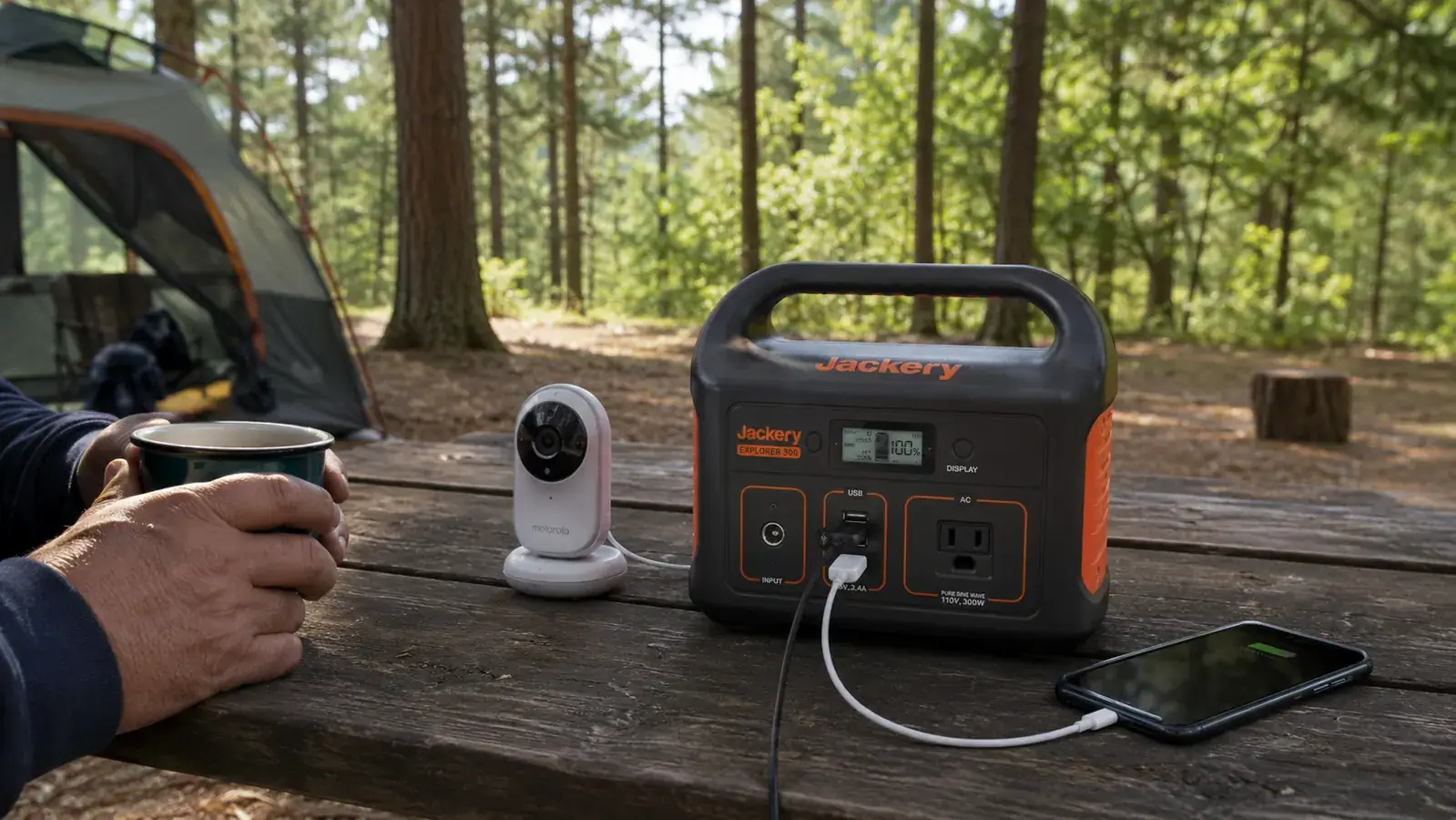
We ordered the Jackery Explorer 300 two weeks before the trip. When it showed up, the first thing I did was plug in our Hatch Rest white-noise machine and the Infant Optics DXR-8 monitor at the same time. Both ran. The Jackery's display ticked down slowly from 292Wh. I ran the test for three hours and barely put a dent in it. That was when I actually believed we were going.
We left on a Thursday morning. The Jackery fit in the back of our Tacoma between the cooler and the tent bag. It weighs around seven pounds, which is not nothing, but it is not a car battery either. Sarah set it up on the picnic table when we got to our site, and by the time we had the tent staked out, the monitor and the white-noise machine were already plugged in and running. We pre-charged the unit at home using a standard wall outlet, which took about five hours from near-empty to full.
Maeve slept nine hours straight on Friday night, the monitor humming, the white-noise machine running, the whole campsite quiet except for owls. We had not had a night like that in months.
Still charging phones off your car and hoping the battery holds? There is a better way.
The Jackery Explorer 300 runs a baby monitor, white-noise machine, and two phones off a single charge for a full weekend. It comes fully ready to go out of the box and weighs about seven pounds.
Amazon Check Today's Price on Amazon →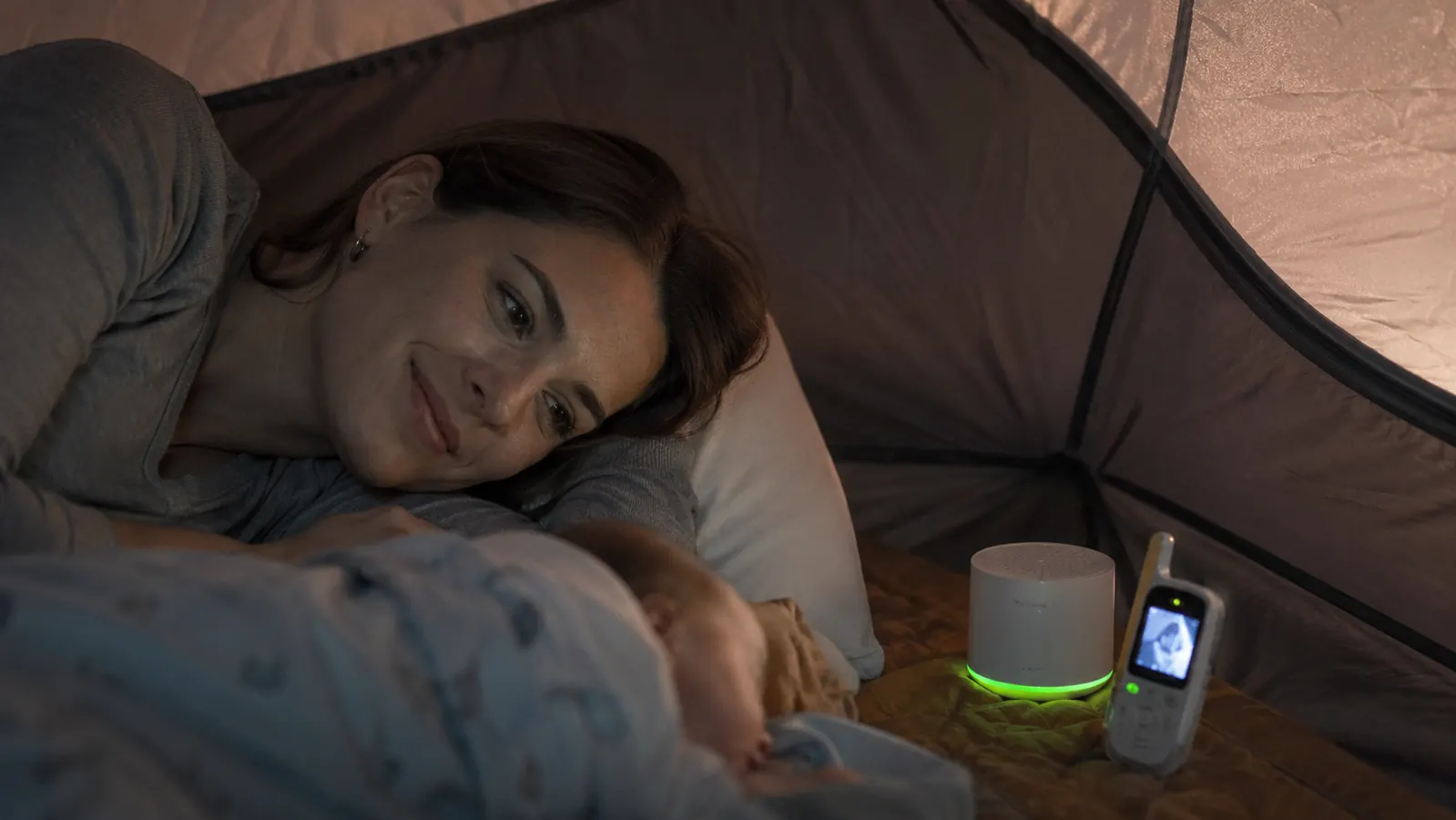
Friday went the way good camping trips should. We hiked the Ouachita Trail for about four miles in the morning, came back and ate lunch at the site, and Maeve napped in the tent while Sarah and I sat in the shade and did absolutely nothing for ninety minutes. That is the thing about camping with a small kid that people do not tell you. The logistics are harder, but the pace is actually slower. Nobody is rushing anywhere. You sit, you eat, you walk around, you sit some more. The Jackery sat on the table and did its job without us thinking about it once.
Saturday night tested it a little more. We had the monitor running, the white-noise machine on medium, and both our phones plugged in for a couple of hours in the evening. We also ran a small USB fan for Maeve during the warmest part of Friday night, which I had not planned for. By Sunday morning, the Jackery still showed around forty percent charge on the display. Three nights, four devices running at various points, and we had nearly half the battery left. I will admit I expected it to be closer to empty.
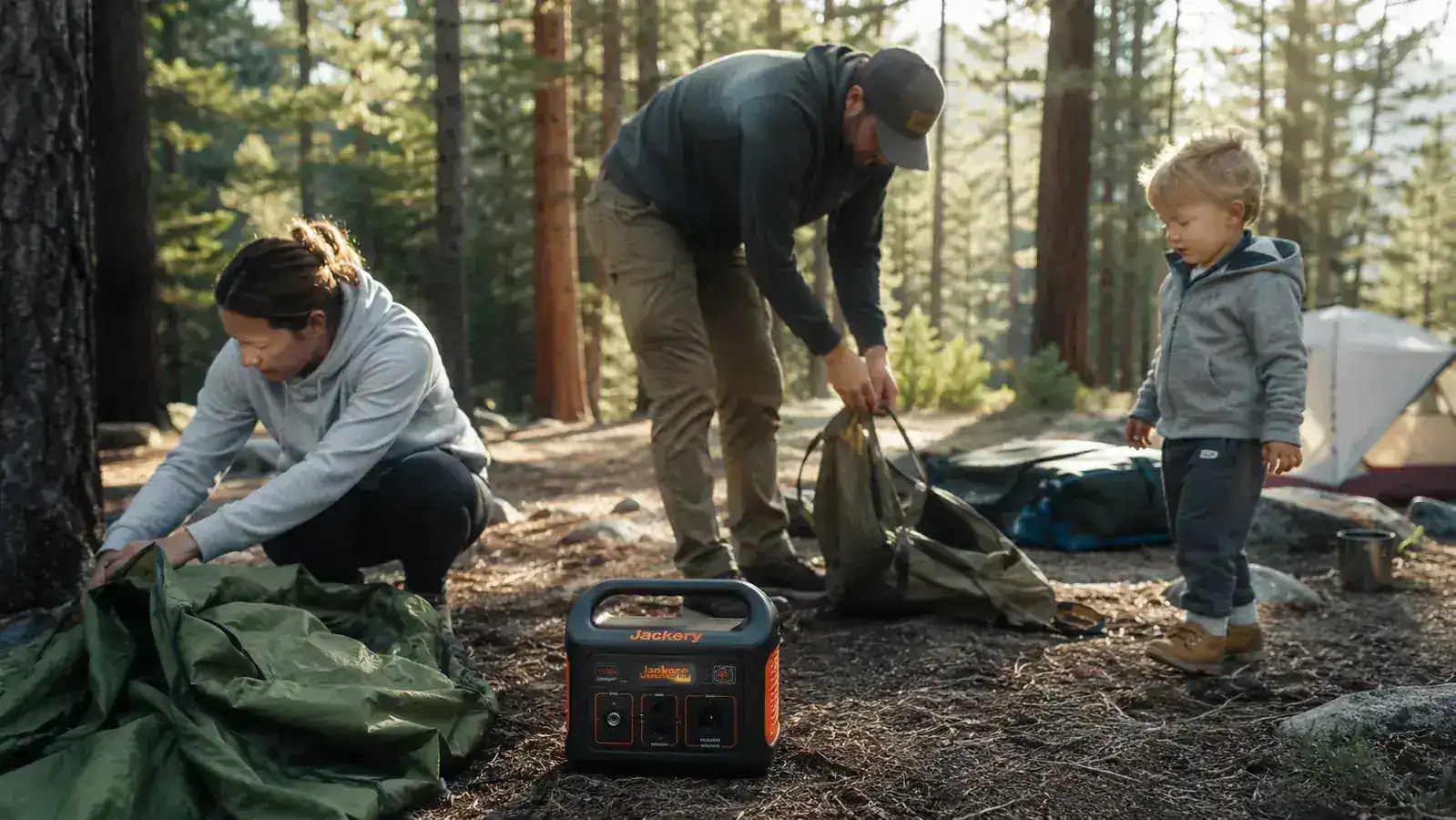
The ride home was different from any camping trip homecoming I can remember. Sarah and I were not exhausted in that hollow, nothing-went-right way. Maeve slept in her car seat the whole drive back. We were already talking about where we wanted to go in October. That is the clearest sign I know that a trip went well: you start planning the next one before you have even done the laundry.
I want to be straight with you about what this thing does not do. It is not a generator. It will not run a space heater or an electric skillet or anything with a big heating element. The AC outlet on the Explorer 300 is rated for 300 watts continuous, which covers low-draw items comfortably but not a coffee maker or a hair dryer. If you are looking to power a camp kitchen or a full CPAP machine all night, you will want to look at a larger unit. For what we needed, which was monitors, phones, and a small fan, it was exactly right. You should go in knowing its limits, not discovering them at midnight.
What I Would Tell You If We Were Sitting at My Kitchen Table
If you are in the spot we were in, where you love camping but some piece of your life, a medical device, a baby monitor, a CPAP, a medication that needs to stay cool, is standing between you and the trip, a portable power station is worth taking seriously. The Jackery Explorer 300 is not magic. It is a well-built battery with a straightforward display and ports that work the way they should. What it gave us was permission to stop worrying about one logistical problem and just be at the campsite. That is worth something real. We have already used it twice more since August, once on a backroads drive through the Ozarks and once for a long weekend in a cabin with sketchy outlets. It earns its spot in the truck every time we pack.
If a power problem is the reason you are not camping, this is the fix.
The Jackery Explorer 300 is a 292Wh portable power station with AC, USB-A, USB-C, and DC outputs. It ships ready to charge from a wall outlet, a car port, or a solar panel. Rated 4.6 stars from nearly 12,000 campers.
Amazon Check Today's Price on Amazon →